
Pizza stone
Heats the base evenly and makes a crispy crust. Heavier, and needs some care.
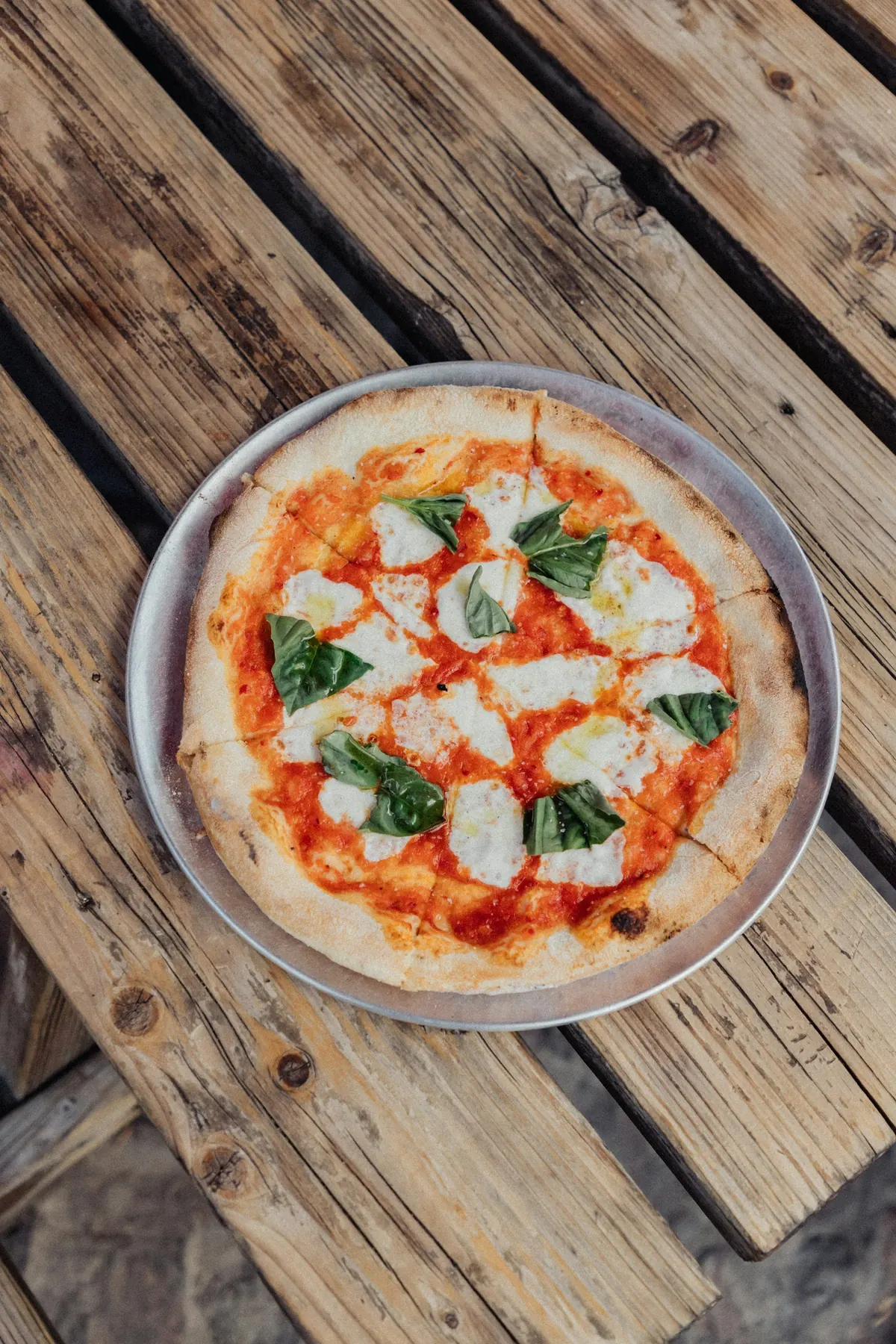
Pizza pan
Easy to use and light. The crust is often thicker and softer.
What is a pizza stone?
A flat baking stone, made of ceramic or stone, that you heat up in the oven before the pizza goes on it. The hot stone cooks the base evenly and gives it a crispy texture. You can bake bread and pastries on it too.
Is a thicker pizza stone better?
Yes. A thicker stone holds more heat and spreads it better across the whole surface, so your pizza cooks more evenly and gets a crisper crust. It is also less likely to break, so it lasts longer. The downside: a thicker stone costs more.
What are the pros and cons of a pizza stone?
- Pros
- Even heat, a crisper crust, and it fits pizzas of every size.
- Cons
- More expensive and heavier than a pan, and it takes some practice and care.
What is a pizza pan?
A metal pan, usually round, often with a nonstick coating so the pizza does not stick. Round pans come from about 6 to 28 inches (15 to 70 cm); the most popular size is about 14 inches (35 cm). For a bigger pizza you can use a rectangular baking sheet.
There are pans with holes and pans without. Pans with holes give a crispier crust. Pans without holes are easier to use, but the crust can be a bit soft.
What are the pros and cons of a pizza pan?
- Pros
- Easy to use, light, and the raised edge keeps the toppings on the pizza.
- Cons
- A thicker, softer crust than on a stone, and cheese that sticks can be hard to clean off.
So which is best?
If you want to be a better pizza maker, go for a pizza stone, and pick a thicker one. If you want it easy, a pan will do the job.
With a pizza oven, the stone is already built in. Choosing an oven: Which pizza oven should a beginner buy?